
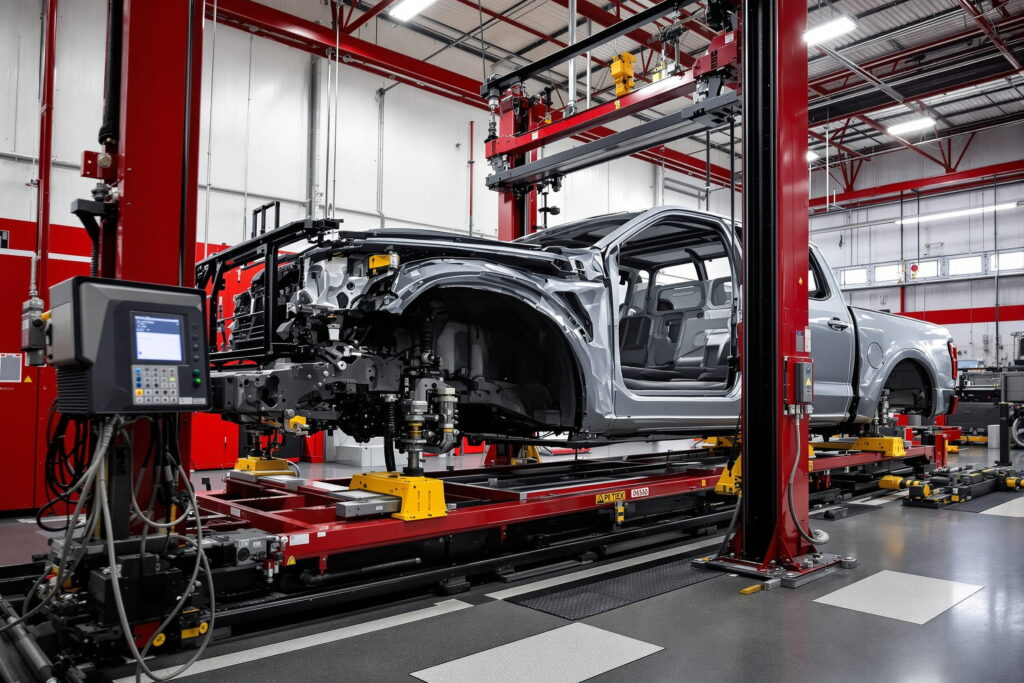
Frame damage is not always visible. Discover how computerized frame straightening restores handling and crashworthiness. An accident can leave your vehicle looking perfectly fine on the surface, while the underlying structure suffers significant warping. Modern vehicles rely on precise geometry to keep drivers safe on the road. When this structural geometry shifts, the consequences can be severe. Understanding what happens beneath the exterior panels is the first step in ensuring your car remains completely safe to drive.
The hidden dangers of post-collision frame damage
Many drivers assume that if they can still drive their car away from a minor fender bender, everything is fine. A bent frame, however, acts like a misaligned foundation on a house. Over time, this structural flaw creates compounding mechanical issues.
You might start to notice unusual noises, uneven tire wear, or doors and windows that no longer close properly. More importantly, the vehicle’s structural integrity is significantly compromised. The frame is the core support system for your entire vehicle. If a second collision occurs, a weakened frame will fail to protect the passengers inside, making what should be a minor impact far more dangerous.
What is computerized frame straightening?
In the past, mechanics relied heavily on manual measuring and mechanical pulling to fix frames. Today, modern auto body shops utilize highly advanced technology to ensure absolute precision. Computerized frame straightening uses lasers, sonic sensors, and specialized diagnostic software to measure the damaged vehicle from multiple angles.
These precise measurements are then compared to the manufacturer’s original factory specifications. Once the exact deviations are identified, technicians use heavy-duty hydraulic machines to carefully and accurately pull the metal back into its proper position. This technology guarantees that the repairs are accurate down to the millimeter.
Restoring vehicle handling and alignment
Driving a vehicle with a warped frame is both frustrating and dangerous. The frame serves as the essential mounting point for the suspension, axles, and steering systems. If these mounting points are off by even a fraction of an inch, the vehicle will constantly pull to one side.
You may experience a vibrating steering wheel, and the car will struggle to maintain a straight line on the highway. Standard wheel alignments cannot fix this issue because the mounting foundation itself is crooked. Computerized frame straightening corrects this foundational geometry, allowing suspension components to align correctly and restoring a smooth, predictable ride.
Ensuring crashworthiness and structural integrity
Modern cars are engineered with specific crumple zones. These specific areas are meticulously designed to crush during an impact, absorbing the kinetic energy before it can reach the passenger cabin. A frame that has already been bent or stressed has lost its ability to absorb this energy effectively.
Instead of crumpling as intended, a previously damaged frame might buckle unpredictably. It could even transfer the crash force directly to the occupants. Restoring the frame to its exact factory specifications ensures that these critical safety features function properly, keeping you and your family safe on the road.
Trusting the experts with your vehicle’s structural repair
Ignoring potential frame damage is a risk no driver should take. A vehicle that looks fine on the outside can still harbor dangerous structural weaknesses underneath. Relying on a certified collision repair center to inspect and correctly straighten your frame is the only way to guarantee your vehicle is truly road-ready. If you have recently been in an accident, insist on a comprehensive computerized frame inspection to protect your investment and ensure your peace of mind.