Not every bumper needs full replacement. Certified technicians explain what determines whether repair or replacement is best.
A minor fender bender or a momentary lapse in parking judgment can leave your vehicle looking worse for wear. When you step out to inspect the damage, the immediate concern is usually how much it will cost to fix. Many drivers assume that any significant impact means buying a brand-new part. However, modern auto body techniques allow professionals to salvage parts that might have been destined for the scrap heap a decade ago.
Understanding the criteria professionals use to evaluate automotive damage can save you time and money. It also guarantees your car remains safe to drive. By learning the basics of bodywork assessment, you can make informed decisions when consulting with your local auto shop.
Understanding Bumper Damage: Scratches, Dents, and Cracks
Modern bumpers are primarily constructed from plastic covers placed over a rigid reinforcement bar. This plastic material is designed to flex and absorb minor impacts, which helps protect both the vehicle frame and the passengers inside. Because of this design, the damage they sustain usually falls into three distinct categories.
Scratches are the most common issue. They range from superficial clear coat scuffs to deep gouges that penetrate the paint down to the raw plastic. Dents occur when the plastic stretches inward after an impact. Thanks to the flexibility of the material, a dent does not always mean the structure is broken. Cracks represent the most severe form of plastic damage, occurring when the impact force exceeds the material’s flexibility, causing the plastic to split or shatter entirely.
When Repair is the Best Option
Auto body technicians prefer to repair rather than replace whenever it is safely possible. If the damage is confined to the surface, a repair is usually the most logical route.
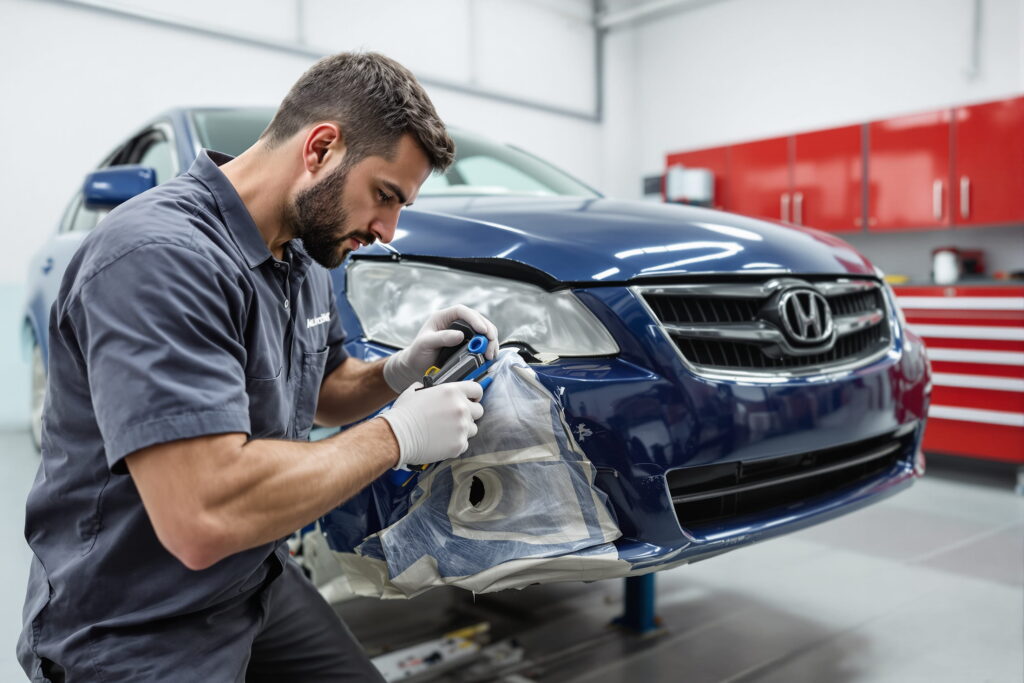
Scuffs, paint transfers from other cars, and shallow scratches can often be buffed out or sanded down and repainted. Even if a dent looks alarming, technicians can frequently use specialized heating tools to gently mold the plastic back into its original shape. Small punctures or minor tears in the plastic can also be welded using specific automotive adhesives and fillers. If the structural mounting points remain intact and the damage is localized, opting for a repair will get your car back on the road quickly and affordably.
When Replacement is Necessary
Some impacts compromise the part entirely. If a bumper is severely cracked across a wide area, the structural integrity of the plastic is gone. Patching a massive split is risky because the repaired area will lack the strength to withstand a subsequent collision.
Replacement is mandatory if the hidden mounting tabs—the small plastic clips that connect the cover to the vehicle’s frame—are sheared off. Without these tabs, the cover cannot be securely attached to the car, leading to rattling or detaching at highway speeds. Severe warping that cannot be reshaped by heat also necessitates a brand-new cover.
Factors Certified Technicians Consider
A visual inspection is only the first step. Certified collision repair experts look beyond the cosmetic blemishes to evaluate the underlying safety features of the vehicle.
Modern cars are equipped with Advanced Driver Assistance Systems (ADAS). These systems rely on a network of sensors and cameras, many of which are housed directly behind or embedded within the bumper. If a collision damages these sensors, or if repairing the plastic cover involves using thick fillers that might block a sensor’s field of view, technicians must recommend a replacement. Safety always takes precedence over saving a piece of plastic. The metal reinforcement bar located behind the plastic cover must also be inspected. If that steel or aluminum bar is bent, it must be replaced to ensure the vehicle can properly absorb future impacts.
Cost Comparisons
The financial difference between fixing an existing part and buying a new one comes down to the balance of parts and labor.
Repairs are generally labor-intensive but require very few physical materials. You are paying for the technician’s expertise in sanding, filling, shaping, and color-matching the paint. This often results in a lower overall bill.
Replacement involves purchasing the new part, which can be expensive depending on your vehicle’s make and model. The new cover arrives unpainted, meaning you still have to pay for the labor and materials to paint it to match your car. Furthermore, if new ADAS sensors are installed, the vehicle will require a recalibration process. This high-tech alignment adds to the final invoice but is absolutely vital for features like automatic emergency braking and blind-spot monitoring to function correctly.
Making the Right Choice for Your Vehicle
Navigating auto body repairs does not have to be a stressful ordeal. By recognizing the difference between a superficial scratch and a structural compromise, you can approach the repair process with confidence. Always seek out certified collision centers that utilize computerized diagnostic tools and follow manufacturer guidelines. Request a detailed estimate that breaks down the labor, parts, and sensor calibration required for your specific situation. Getting a professional assessment ensures your vehicle will look great and, more importantly, keep you safe on the road.