
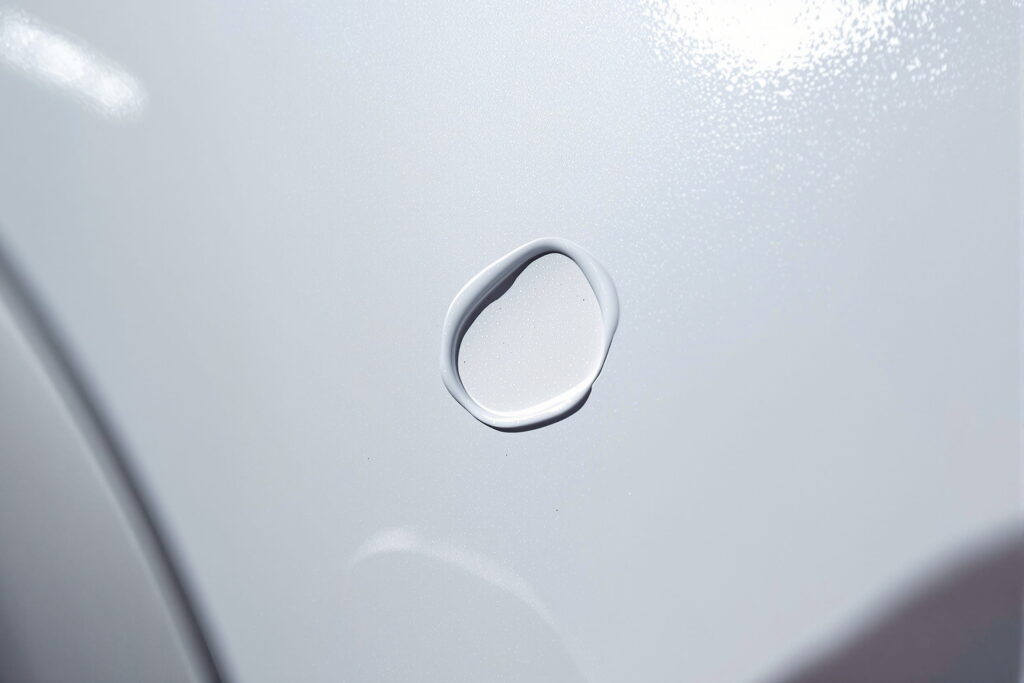
That tiny paint chip might not look like much, but moisture and Georgia humidity can turn it into serious corrosion fast. You are driving down the highway, minding your own business, when a rogue pebble flies up from the tire of a semi-truck. You hear a sharp smack against your hood. Upon inspection, you find a small ding in the paint no larger than the tip of a ballpoint pen. Because the damage seems cosmetic, you decide to ignore it and go about your day.
Unfortunately, ignoring small blemishes on your vehicle’s exterior often leads to highly expensive consequences. Car paint serves a much greater purpose than making your vehicle look shiny and appealing. It acts as a vital protective barrier, shielding the vulnerable steel framework of your car from the harsh elements of the outside world.
When that barrier breaks, the clock starts ticking. Understanding the science behind corrosion and the environmental factors at play can help you save thousands of dollars in auto body repairs.
By taking a closer look at how a seemingly harmless chip evolves into structural damage, you can learn exactly why prompt maintenance is the smartest choice for your vehicle.
The Anatomy of a Paint Chip
To understand the threat of a paint chip, you need to know how modern automotive finishes are applied. Your car’s exterior consists of several distinct layers. At the very bottom lies the bare steel body panel. Above that sits a layer of primer, followed by the base coat (which provides the color). Finally, a clear coat seals everything in, providing gloss and protection against ultraviolet rays.
A minor scratch might only damage the clear coat. However, a rock striking the vehicle at highway speeds typically fractures all these layers, exposing the bare metal underneath.
Once the bare steel sees the light of day, it loses all its defenses. The protective seal is broken, and a microscopic environment is created where chemical reactions can freely occur. The chip creates a tiny crater that easily catches and holds environmental contaminants, setting the stage for significant deterioration.
The Role of Moisture and Georgia Humidity
Rust is the common name for iron oxide. It occurs when iron (or an alloy containing iron, like steel) reacts with oxygen and water. For this chemical reaction to take place, moisture must be present.
Georgia’s climate provides the absolute perfect breeding ground for this destructive process. With long, sweltering summers and high relative humidity year-round, the air is constantly saturated with water vapor. You do not even need a heavy rainstorm for rust to form. The thick, muggy air and heavy morning dew provide all the moisture required to kickstart the oxidation process.
Constant Environmental Exposure
When a paint chip exposes bare metal, the Georgia humidity acts as an invisible, relentless catalyst. Airborne moisture settles into the small crater left by the rock. Because the chip is small, the water often remains trapped there, shielded from the wind that might otherwise dry it out.
As the trapped water reacts with the exposed steel and oxygen, a thin layer of iron oxide begins to form. If you live near the coast where salt is present in the air, or if you drive on roads treated during winter storms, the reaction accelerates dramatically. Salt acts as a heavy accelerant for oxidation, turning a slow decay into a rapid degradation.
The Escalation Process
The journey from a tiny rock chip to a massive rust hole happens in three distinct phases. Monitoring these stages highlights exactly why early intervention is crucial.
Phase 1: Surface Rust
Within just a few weeks of exposure, the exposed metal inside the paint chip will begin to change color. You will notice a light orange or brownish tint forming within the crater. At this stage, the rust is purely on the surface. The structural integrity of the metal remains fully intact, and the damage is highly localized. Repairing the vehicle at this phase is straightforward, often requiring a simple cleaning of the chip and the application of touch-up paint.
Phase 2: Scale Rust
If surface rust is left untreated, the chemical reaction continues to eat away at the steel. Because rust molecules are larger than the original steel molecules, the rusted area actually expands. This expansion pushes outward and upward, breaking the bond between the metal and the surrounding healthy paint.
You will start to see the paint bubbling, blistering, or flaking off around the original chip. This is known as scale rust. The corrosion is now spreading horizontally underneath the paint, attacking metal that you cannot even see. Fixing scale rust requires grinding away the damaged metal, applying fillers, and repainting the entire panel.
Phase 3: Penetrating Rust
Eventually, the scale rust eats completely through the metal panel. This is penetrating rust. The structural integrity of the car is compromised, and unsightly holes appear in the bodywork. Water can now freely enter the internal cavities of the vehicle, potentially damaging electrical components or the interior cabin.
Once a panel reaches this stage of decay, it usually cannot be patched. The entire affected panel must be cut out and replaced by a professional auto body shop, turning a minor inconvenience into a major financial burden.
Protect Your Investment with Timely Repairs
The lifespan of your vehicle’s exterior depends entirely on how quickly you address minor damage. A tiny imperfection on your hood or door panel operates as an open wound, inviting moisture, humidity, and oxygen to slowly destroy the metal underneath.
Make it a habit to regularly inspect your vehicle after long road trips or highway commutes. If you spot a chip, take action immediately. Applying a touch-up pen or scheduling a quick visit to a professional repair shop takes very little time and money. By staying proactive, you preserve the value, safety, and beauty of your car for years to come.