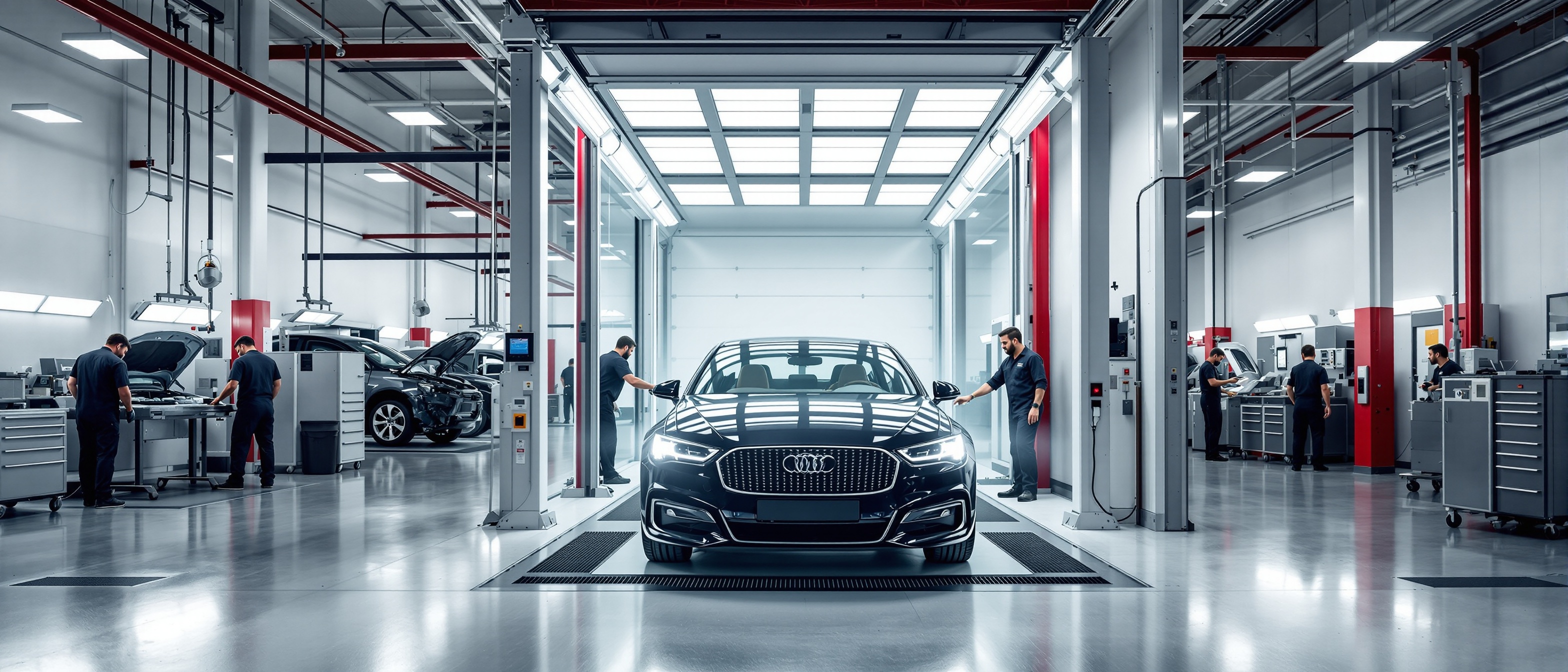
Learn why choosing a certified collision repair center matters for your safety and why uncertified repairs may compromise critical structural work. Experiencing a car accident is undoubtedly stressful, and the immediate aftermath usually involves a rush of phone calls, insurance claims, and logistical headaches. Amid this chaos, finding a reliable auto body shop often feels like just another item on a long checklist. Many drivers simply choose the closest available garage or the one recommended by their insurance adjuster to get their vehicle back on the road quickly.
However, modern cars are highly complex machines. They rely on intricate networks of sensors, specific metal alloys, and carefully engineered crumple zones to keep occupants safe. Repairing these advanced systems requires specialized knowledge and equipment. Trusting a standard, uncertified garage with complex structural repairs can lead to severe safety issues down the line.
Understanding the repair process is essential for protecting yourself and your passengers. A properly repaired vehicle will react exactly as the manufacturer intended if you are ever involved in another accident. Reading this guide will help you understand the vast differences between standard auto body shops and certified repair centers, empowering you to make the safest possible choice for your vehicle.
Understanding Certified Collision Repair Centers
A certified collision repair center operates at a significantly higher standard than an average auto body shop. To earn this designation, a facility must undergo rigorous evaluations by vehicle manufacturers (Original Equipment Manufacturers, or OEMs) or recognized independent industry organizations, such as I-CAR (the Inter-Industry Conference on Auto Collision Repair).
Achieving certification is not a one-time event. Repair centers must continuously invest in advanced training for their technicians, ensuring they understand the latest automotive technologies and repair methodologies. They must also equip their facilities with the specific, highly calibrated tools required to mend modern vehicles accurately.
When a shop holds an OEM certification, it means the car manufacturer has explicitly vetted that business. The manufacturer trusts the facility to repair their vehicles using exact factory specifications. These technicians have access to the manufacturer’s proprietary repair blueprints, which detail precisely where to cut, weld, and apply structural adhesives. This level of insight is critical, as a repair technique that works perfectly on one model might cause catastrophic failure on another.
The Risks of Uncertified Structural Repairs
Choosing an uncertified shop often exposes drivers to hidden dangers. Without access to specialized training and up-to-date OEM repair blueprints, mechanics may unknowingly compromise a vehicle’s structural integrity.
Inadequate Welding and Material Mishandling
Modern vehicles use a mixture of high-strength steel, aluminum, and carbon fiber to reduce weight while maximizing passenger protection. Each material requires a unique approach during the repair process. For instance, applying too much heat to ultra-high-strength steel can permanently weaken the metal. An uncertified technician might use traditional welding techniques on these advanced materials, essentially destroying their crash-resistance properties. If the car is involved in a subsequent collision, these weakened joints can fail entirely, allowing the impact energy to travel directly into the passenger cabin.
Disrupted Crumple Zones
Automotive engineers design specific sections of a car’s frame to crush upon impact. These “crumple zones” absorb kinetic energy, slowing down the force before it reaches the occupants. If an uncertified shop uses aftermarket parts that are stiffer or weaker than the original components, the timing of the energy absorption changes. A stiffer aftermarket part might prevent the crumple zone from collapsing as intended, transferring a massive jolt to the driver and passengers.
Misaligned Advanced Safety Systems
Vehicles today are essentially computers on wheels, equipped with Advanced Driver Assistance Systems (ADAS) like lane departure warnings, automatic emergency braking, and blind-spot monitors. These systems rely on sensors and cameras mounted inside bumpers, mirrors, and windshields. Uncertified shops often lack the costly diagnostic equipment needed to recalibrate these sensors after a repair. Even a millimeter of misalignment can cause an automatic braking system to fail or deploy at the wrong time, creating a severe hazard on the highway.
How Certification Ensures Vehicle Integrity and Safety Standards
Certified collision repair centers mitigate all of these risks by adhering to strict, manufacturer-approved procedures. Their commitment to quality control guarantees that your vehicle meets factory safety standards before it ever leaves the lot.
Mandatory Use of OEM Parts and Procedures
Certified facilities prioritize the use of Original Equipment Manufacturer parts. These components are identical to the ones installed on the factory assembly line. They are crash-tested and guaranteed to perform exactly as the engineers intended. Furthermore, certified technicians follow step-by-step OEM repair manuals. They do not guess or use outdated methods; they measure, cut, and assemble according to the exact instructions provided by the automaker.
Precision 3D Measuring
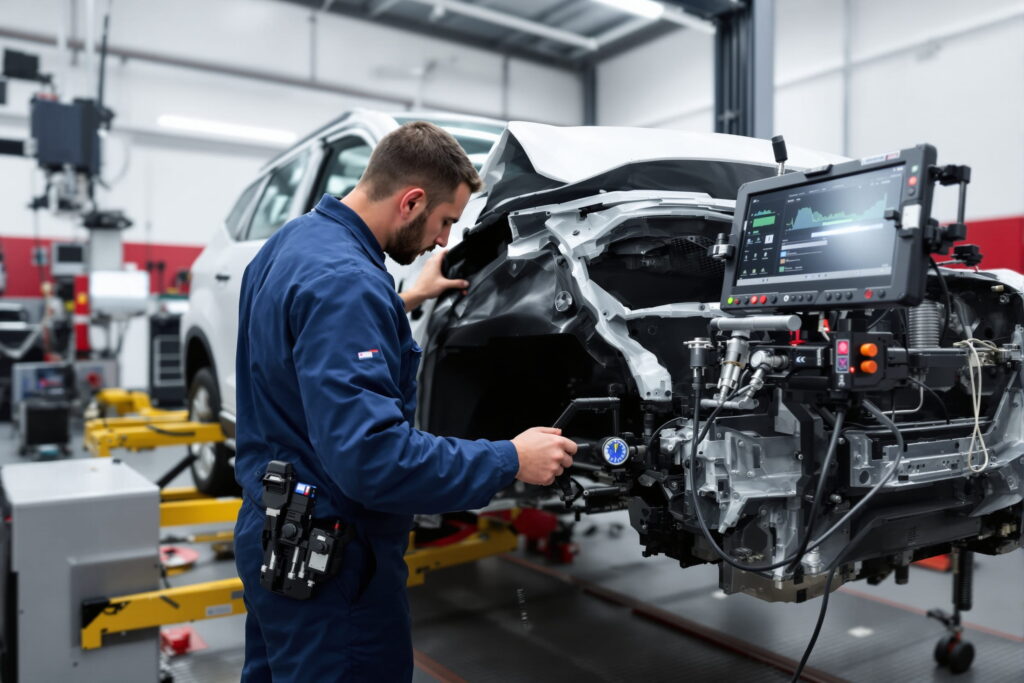
A severe collision can twist a vehicle’s frame, causing alignment issues that are invisible to the naked eye. Certified centers utilize sophisticated 3D electronic measuring systems to scan the car’s structure. These tools compare the damaged frame to the manufacturer’s exact dimensional data, allowing technicians to pull and straighten the chassis back to its original tolerances down to the millimeter. This precision ensures that the vehicle handles correctly and that the suspension geometry remains perfectly aligned.
Comprehensive ADAS Calibration
After replacing a bumper or realigning a frame, a certified shop will perform a complete recalibration of all ADAS components. Technicians use specialized software and physical targeting boards to ensure every camera and radar sensor points in the exact correct direction. This meticulous calibration process ensures that your vehicle’s safety features will protect you effectively when you need them most.
Make the Right Choice for Total Peace of Mind
Your vehicle is a significant investment, but more importantly, it is the vessel that transports you and your loved ones every day. Settling for subpar repairs places everyone inside the car at unnecessary risk.
By demanding a certified collision repair center, you guarantee that highly trained professionals are working on your vehicle using the right tools, the right parts, and the right information. The next time you find yourself navigating the aftermath of an accident, bypass the standard garages and seek out a certified facility. Ask for proof of their OEM or industry certifications. Taking this simple step ensures your vehicle is restored to its exact factory safety standards, providing you with complete peace of mind every time you get behind the wheel.